
Want to improve your photography without learning a new camera setting? Start with these composition tricks!
Composition is simply how you arrange everything inside your photo—your subject, the background, the empty space, and even the angle you choose.
And here’s the best part: these composition tricks work whether you’re using an iPhone, a DSLR, or a mirrorless camera. Before you press the shutter, try one of these three simple changes.
Composition Trick #1: Change Your Point of View

My granddaughter and I were exploring in a local park yesterday when these yellow wildflowers caught her eye. She asked me to take a picture to show her parents. It was the perfect chance to illustrate this composition trick!
First, I lifted my iPhone to my eye level and took this shot. There’s nothing wrong with it, but it totally misses how excited she was. And it makes her look small.
Next, I squatted down to ground level and took the second shot. She looks like she’s the Queen of the Castle! It’s still a snapshot, but it shows much more of her character. She’s still in the same pose. The only change? I changed position!
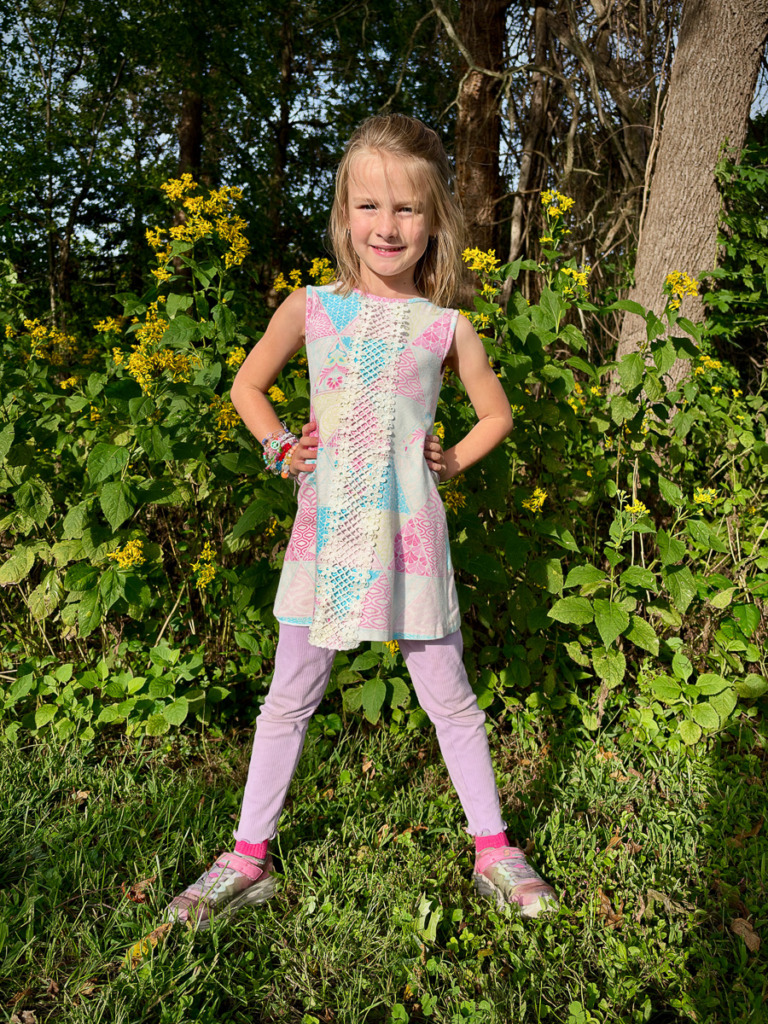
Most of us take photos from exactly where we happen to be standing, with the camera at about eye level. It’s quick. It’s easy. And sometimes it’s exactly the right choice.
But before you take the photo, ask yourself: What would happen if I moved?
Then, try getting lower or holding your camera higher. You can take a few steps to the right or left, or walk around your subject and see what changes.
Even a small change in your position can completely change the photograph. That’s what makes this composition trick so easy and valuable.
If you’re photographing a child or a pet, try getting down closer to their level. If you’re photographing flowers, get low enough to see what’s behind them instead of looking down at the ground.
And when you’re traveling, don’t automatically take the same photograph everyone else is taking from the obvious viewpoint. Move around and look for your view.
You don’t need a different camera. Sometimes you just need a different place to stand.
#2: Watch the Background

Here’s another example of a useful composition trick. In this case, I was with a group of photographers shooting model images for stock. I saved this photo to show what not to do! The first thing I see is the palm tree growing out of her head! I also don’t like the position of her left arm.
So did I ask her to move? No! I did the moving, and look at the difference below.

Her left arm now frames her head, and the surf behind her doesn’t compete for attention. I did the moving, and this photo sells on iStock Getty and Adobe Stock.
So how about you? Have you ever taken a photo you loved, only to notice later that there’s a trash can behind your subject? Or a tree that appears to be growing out of someone’s head? 😊 Don’t forget to try this composition trick!
Our eyes are remarkably good at ignoring distractions when we’re concentrating on our subject, but our cameras aren’t. They record everything, the important and the unimportant!
That’s why one of the easiest ways to improve your photos is to pause for just a second and look behind your subject before you press the shutter. Then, scan the edges of the frame, too. Is there something bright pulling your eye away? A person partially cut off? A sign or pole you don’t need? A photo-bomber you didn’t notice?
Then move. Often, one or two steps to the side is all it takes to turn a distracting background into a much cleaner one.
You can also move closer, change your angle, or wait a few seconds for someone to walk out of the frame. It’s so much easier than trying to remove them in post-processing!
It’s such a small thing, but it can make an enormous difference. I joke that I’m Photoshopping the image in real time! 😎
Composition Trick #3: Give Your Subject Somewhere to Go
Here’s a composition trick that’s especially useful when you’re photographing people, pets, wildlife, sports—or anything that’s moving.
Leave some space in front of your subject.
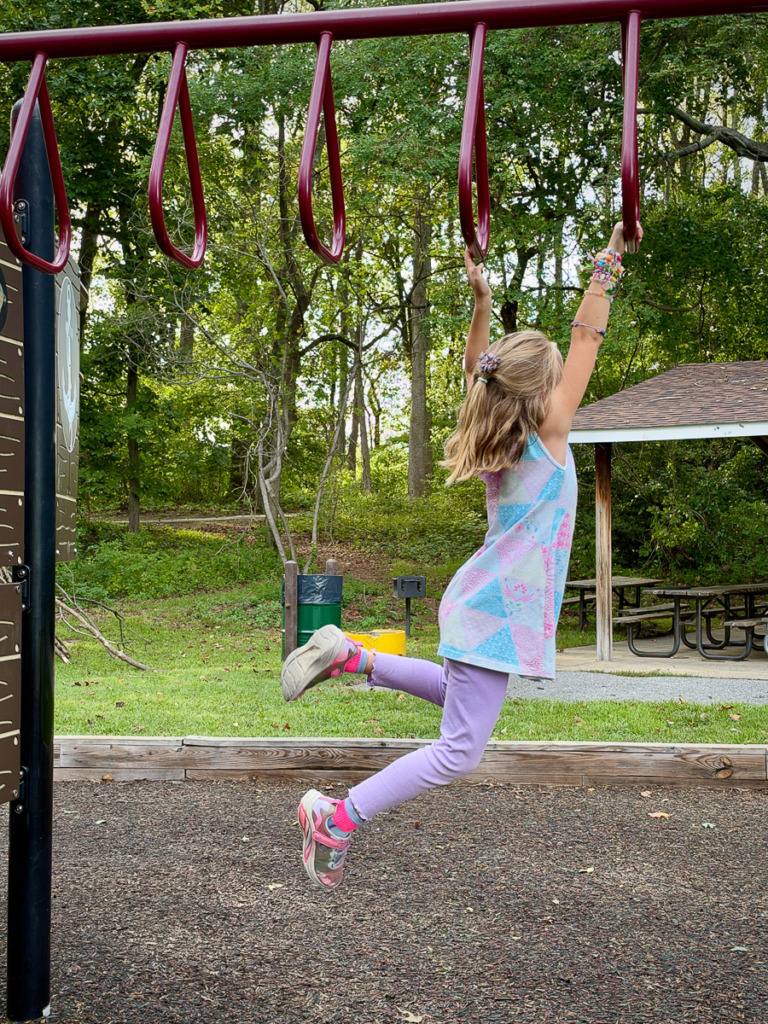
Here’s my granddaughter again. I intentionally took this shot to demonstrate tricks number 2 and 3!
Quick… did you notice the green trash can and yellow container for hot coals behind her? I could have stepped to the left, and they would be gone.
And where is she going? Right out of the picture! A better shot would have her starting to swing across the bars with room to move into. It would be even better if she’s facing my way so I could see her face.
If someone is walking toward the right side of your photo, don’t place them up against the right edge. Give them some room to walk into. If a dog is looking toward the left, leave a little more space on the left. The same idea works with a bicycle speeding down a path, a bird flying across the sky, or a sailboat moving across the water.
And this composition trick even works when your subject isn’t moving. If you’re photographing a person looking off into the distance, leaving room in the direction they’re looking gives the viewer somewhere to look, too. Otherwise, you’re left wondering what distracted your subject.

That little bit of empty space can make your photograph feel more natural and balanced.
Your Camera Isn’t the Secret

Now it’s time for a fun composition trick. Here, I’m following trick #3 while pushing the boundary… My friend Peggy was taking a selfie in front of a lavender field in Provence. I quickly captured this image.
At first, you wonder why she’s looking away from the field and off the right side of the photo. But then you realize she’s taking a selfie, and the field is in her view. It can be fun to play with these composition tricks! This could also work with reflections! What can you think of!
You may have noticed that I haven’t talked about camera settings at all in this post. That’s intentional, because these three composition tricks work with every camera.
Some of the photos in this post are of my granddaughter, taken with my iPhone. I took others of models or friends with my DSLR.
But the camera didn’t decide where I stood. It didn’t notice the distracting background and move two feet to the left. And it didn’t decide where to place my subject inside the frame.
I did.
That’s one of the things I love most about photography. No matter what camera you’re carrying, you get to make those choices. And those little choices can make a very big difference.
Now It’s Your Turn to Try One of These Composition Tricks!
The next time you’re about to take a photo, don’t just take one. Yes, take the obvious photo first. But then stop and try one thing differently.
Change your point of view.
Check your background.
Or give your subject somewhere to go.
Now, take another photo and compare the two. You may be surprised by how much better your second photo is—and you won’t have changed a single camera setting. You’ll simply have changed how you see the picture.
And that’s one of the easiest ways to take better photos.
If you’d like to have more fun using the camera that’s always with you, iPhone Photography Made Easy helps you discover features and settings to capture better images without the complexity!
And what about that mirrorless or DSLR? Camera Mechanics is the answer! Check out what people have said about it here.
Finally, my new iPhone 18 Pro Max is here! And I’m carrying it in a Moment iPhone case! I’ve been using these cases for years and can’t say enough good things about them! I also use their Cineclear Filter to protect my iPhone lenses! (I’m thrilled to be an affiliate of theirs! That means that I may earn a small commission if you click and buy. Click here to see their cases.

You might also like




Leave a reply